Category Archives: Major League Baseball

Sacrifice of D-Day Still Resonates 76 Years Later

June 6 marked the 76th Anniversary of D-Day, which is the name given to the World War II battle involving over 156,000 American, British and Canadian forces landing on five beaches along a 50-mile stretch of the heavily fortified coast of France’s Normandy region in one of the largest amphibious military assaults in history.

With all that is going on in the world today, it can be easy to forget about things that happened so long ago. However, it is during times like these that the need to remember, and learn from history, is even more important. History does not happen in a vacuum, and failing to learn from it can lead to serious consequences.

On June 6, 1944 Allied forces invaded the beaches of Normandy in what would become known as D-Day.
Photo R. Anderson

Led by Supreme Allied Commander General Dwight D. Eisenhower, D-Day consisted of the Allied forces storming beaches at Normandy code named Sword, Juno, Gold, Utah and Omaha.

The storming of the beaches was met by German machine gunners and artillery who tried to hold back the invasion force. The German forces almost succeeded at Omaha, costing the Allies more than two thousand casualties in the opening hours of the battle.

For an idea of just how gruesome this type of frontal beach assault is, one need only watch the opening sequence of Saving Private Ryan. It is easy to forget in this era of drone attacks and smart bombs, that war was once much more hand to hand, leading to much higher casualty rates among its participants.

In total, the Battle of Normandy lasted from June 1944 to August 1944 resulting in the Allied liberation of Western Europe from Nazi Germany’s control. The battle has been called the beginning of the end of war in Europe.

Allied troops used boats like this one at the National World War II Museum in New Orleans on D-Day.
Photo R. Anderson

During the D-Day invasion, all scheduled Major League Baseball games were canceled marking only the second time in MLB history that games were cancelled league wide.

The first cancellation of MLB games happened on the day U.S. president Warren Harding died in 1923.

The third time was when Commissioner Bud Selig stopped play for six days from Sept. 11-16, 2001, following the terrorist attacks of September 11th. Although the start of the 2020 MLB season has been delayed by two months and counting, technically the games have not been cancelled, and are merely postponed.

Two future MLB Hall of Famers, Yogi Berra and Leon Day, participated in D-Day. According to the National Baseball Hall of Fame, 35 Hall of Fame members, including Ted Williams, and more than 500 MLB players served in World War II.

Unfortunately, the time to thank a World War II veteran in person for the sacrifices they made on those beaches over 70 years ago is vanishing rapidly.

According to the US Department of Veterans Affairs, 389,292 of the 16 million Americans who served in World War II were alive in 2019. The United States Veteran’s Administration estimates that a World War II veteran dies around every two minutes. With each death of a WWII vet a piece of history is lost.

The COVID-19 virus effects the elderly at a disproportionate rate, meaning that the loss of WWII veterans could be sped up. Thankfully, there are stories of WWII vets who have made full recoveries from COVID-19 proving that they really are members of the “Greatest Generation.”

Unfortunately, even the greatest generation cannot win the battle against time over the long run. By the year 2036, the VA estimates, there will no longer be any living World War II veterans. For comparison purposes, the last World War I veteran, Frank Buckles, died in February 2011.

When Uncle Sam called them, Members of the Greatest Generation answered. Unfortunately, even the greatest generation cannot win the battle against time over the long run. By the year 2036, the VA estimates, there will no longer be any living World War II veterans.
Photo R. Anderson

Thanks to the efforts of organizations like the National World War II Museum in New Orleans, the stories of the veterans of WWII have been captured to ensure that they can be told long after the men and women who fought to free the world from tyranny are no longer with us.

It is likely, and hopeful, that the world will not see another war of the scale of World War II. While there will always be a need for a certain number of boots on the ground, advancements in technology have greatly reduced the number of boots required to conduct modern warfare.

But while the number of soldiers needed to protect freedom will continue to decline in the coming years, that does not minimize the level of sacrifice made by each of the soldiers who wear the uniform.

The example of D-Day shows us what happens when men and women from all walks of life unite against a common foe in order to seek an outcome that improves life for everyone. Every inch of sand that was captured on the beaches of Normandy involved a sacrifice the likes of which the world will hopefully never see again.

But, when they were asked to make that sacrifice, the soldiers on the front lines charged ahead for the greater good. That united we stand, and divided we fall outlook on life can be hard to see at times, but it is in the DNA of each and every one of us.

Thanks to the efforts of organizations like the National World War II Museum in New Orleans, the stories of the veterans of WWII have been captured to ensure that they can be told long after the men and women who fought to free the world from tyranny are no longer with us.
Photo R. Anderson

Sadly, many images on the news the last few weeks have shown both unity for a cause, as well as armed resistance against the cause.

Television screens have been full of images of protests for social justice, and law enforcement entities clashing in cities across America. Now more than ever it is important to cling to the ideals of finding common ground and working together versus battling against each other.

So, take some time before the start of the hustle and bustle of the weekend to remember the sacrifice made on D-Day that helped maintain freedom, and reflect on the high cost of freedom paid by each generation that has gone before.

And by all means if you happen to see a World War II veteran, or any other veteran for that matter, be sure to thank them for their service and their sacrifice.

And, wear a mask when you see them as a show of respect for that sacrifice when you are out and about. The veterans of World War II are already dying at a rapid rate, the last thing any of us should want to do is hasten their demise by infecting them with COVID-19. Storming a beach when people are shooting at you is difficult. Wearing a mask to honor the people who charged when the bullets were flying is a very simple thing to do.

Honor their sacrifice by honoring them and protecting them. They showed they would do the same for each of us when they secured our freedom one inch of sand at a time.

Now if you’ll excuse me, I have a museum visit to plan.

Copyright 2020 R. Anderson

Baseball is Still Trying to Save Season as Other Sports Hit Cruise Control

As Major League Baseball’s owners and players continue to haggle over the parameters of what a 2020 season would look like in terms of number of games played and percentage of compensation, NASCAR and IndyCar are up and running, and the NBA is about to be up and running.

NASCAR which became the first major professional sports league to return to action last month, is set to hit another milestone on June 14 when it allows some fans into the track to see the action in person. Welcoming of fans into the facility comes with restrictions, and is also occurring during a time when nearly half of the states in the United States are seeing the number of cases of COVID-19 go up. It is also occurring as other states are being questioned about whether they are providing an accurate count of the total number of COVID-19 cases within their communities.

Make no mistake, these are truly uncharted waters, and the entire process is just one big wave away from capsizing faster than the ship in The Poseidon Adventure. Still, for many it is full steam ahead, into the great wide open.

The fact that other sports leagues are resuming their interrupted seasons is placing added pressure on MLB to start their 2020 season, which was originally scheduled to begin on March 26. While the main issues preventing the MLB from playing ball seem to be mostly financial, not all of the players are being affected the same way.

Established MLB players, and recently drafted Minor League Baseball (MiLB) players, can easily sit out the season if it comes down to it since for the most part their jobs are safe.

The fact that other sports leagues are resuming their interrupted seasons is placing added pressure on MLB to start their 2020 season, which was originally scheduled to begin on March 26.
Photo R. Anderson

For other players, a lost season could cost them their last chance to make it onto a Big-League roster and leave the long bus rides of MiLB behind.

I have been thinking a lot about those players in both affiliated and independent baseball lately. As I have noted several times before, I cut my Ballpark teeth by mostly watching Southern League baseball when I was growing up. In recent years, despite being located closer to an MLB Ballpark, than an Independent League Ballpark, I have found myself driving the extra 20 minutes and spending more time watching the Sugar Land Skeeters of the Atlantic League of Professional Baseball (ALPA) than the Houston Astros.

Nothing says Ballpark fun quite like a mascot adjacent box seat near the dugout. Isn’t that right Swatson?
Photo R. Anderson

For me, Minor League Baseball is a purer form of the game and allows me to be closer to the field for the same price as a nosebleed ticket at an MLB Ballpark. With Minor League Ballparks being about a third of the size of their Major League counterparts, one can really get up close and personal to the action.

Unfortunately, those Minor League players that I enjoy watching the most are the ones who are finding uncertain futures, as well as uneasy presents. To their credit many MLB teams and players have offered to pay the salaries of the players in their farm systems. However, with efforts to reduce the number of MiLB teams, as well as reducing the number of players drafted, in the coming years, there will be far fewer people who will get to chase their dreams of making it to the Show.

Of course, less affiliated Minor League baseball should mean an uptick in players wanting to play Independent League baseball which may lead to the rise of new leagues and teams to fill the void left behind following any contraction of affiliated baseball.

When I was in high school, I had a friend who was a star pitcher on the school baseball team. The team made it to the state playoffs my junior year. The following year, it was not uncommon to see various pro scouts in the stands.

My friend was a southpaw pitcher, which was then, and continues to be a hot commodity sought after by many MLB clubs. My friend ended up signing with the New York Yankees in the second round of the MLB June Amateur Draft right out of high school and as Tom Petty would say, “the future was wide open.”

Setbacks on the field, as well as off the field, led him to bounce around the Minor Leagues like a fan trying to reach first base in a dizzy bat race. My friend spent six years in the Yankees organization and never advanced above AA ball, as well as playing four years of Independent League baseball. Over 10 seasons he had a career .513 winning percentage, and a career 4.32 earned run average (ERA). After 10 years of chasing the dream my friend finally called it a career without so much as a cup of coffee in the show.

My friend spent six years in the Yankees organization and never advanced above AA ball, as well as playing four years of Independent League baseball proving that not every dream of playing MLB ball comes true.
Photo R. Anderson

There are thousands of players just like my friend who seek the bright lights of big-league ballparks only to find their dreams cut short. While the answer varies depending on who you ask, most people can agree that only about 10 to 20 percent of the people drafted by MLB teams will ever make it to the Majors.

So, the thinking goes that by reducing the number of teams and the rounds in the draft MLB is forcing people who wouldn’t have made it to the MLB anyway to start their post baseball playing days earlier.

Many will bounce along as long as possible chasing the dream until the realities of life and family commitments lead them to a steadier form of work. These players are the real Crash Davis types, in honor of the character Kevin Costner played in Bull Durham.

I lost track of my friend a few years before the end of his career but would still follow his career whenever I saw a blurb on one of the Minor League sites. I hope he is doing well for himself and that he landed on his feet after he hung up his glove for the last time.

Whenever baseball does resume it will be different on so many fronts. COVID-19 exposed a crack in the professional sports diversion that people have counted on to get them through so many other trying times in the past. Now that people know that sports are not the recession proof, tragedy proof, and pandemic proof light in a time of darkness that they thought they were, people will need to decide whether they will still put their trust in sports to distract and comfort them, or if they will find other ways to deal with whatever life throws at them.

In many ways, we are all Minor League players trying to hang on to the dream for one more season, while knowing in the back of our heads that at some point we will need to put our cleats away and face life head on.

Now if you’ll excuse me, I have a sudden urge to watch Bull Durham.

Copyright 2020 R. Anderson


Social Experiment on Value of Social Distancing to Face Biggest Test as Sports World Watches

Throughout the worldwide timeout brought about by the COVID-19 virus, there have been two main schools of thought related to the value of people social distancing to avoid spreading the virus.

One school of thought, let’s call them science, maintains that the best way to mitigate the spread of a virus, that has no cure, and no proven treatment, is to stay six feet apart, wear masks when around other people, wash hands constantly, and avoid touching the mouth and nose area.

The other school of thought, let’s call them Sweden, believes that the virus that has killed over 109,000 Americans, and over 330,000 people worldwide, will go away on its own, and that people should just roll the dice and go about their lives as if a huge global pandemic was not hanging over their heads in an effort to establish herd immunity equipped with the knowledge that one has to break a few eggs to make an omelette.

There are of course nuggets of truth to each side’s position, since no one really knows for sure how this brand-new virus will finally ramp down. Team science is right in saying that smaller gatherings of people mean less opportunities to spread the virus. At the same time, team Sweden is also right in saying that one cannot stay isolated forever.

While the two camps differ on the value of social distancing as a whole, one thing that both sides should be able to agree on, is that minority populations, elderly populations, and populations with underlying health conditions should take extra precautions related to how they respond to the threat of COVID-19.

To a certain degree, each and every one of us is free to decide which camp we want to belong to, sort of like the people of Los Angeles have the choice between rooting for the Angels, or the Dodgers. One team wins a lot, has a storied history, and has their own unique hot dog. The other team is the Angels.

To a certain degree, each and every one of us is free to decide which camp we want to belong to when it comes to social distancing, or not social distancing during the time of COVID-19, just like the people of Los Angeles have the choice between rooting for the Angels, or the Dodgers. One team wins a lot, has a storied history, and has their own unique hot dog. The other team is the Angels.
Photo R. Anderson

Starting today, the two COVID-19 camps are likely to see which approach to social distancing was the right call. The data points come courtesy of 14 days of coast to coast protests acting as a major case study in what happens when thousands of people occupy the same space for extended periods of time in the midst of a pandemic.

Although many people have been seen wearing masks during television coverage of the protests, there are also many people who are not wearing masks. Additionally, with additional law enforcement and media members on the street in close proximity many cities are facing the equivalent of filling several Ballparks multiple times each day.

The widely agreed upon incubation period for COVID-19 is around two weeks. So, with today marking the 14th day since the protests began, any wide-spread outbreaks of the virus should start to materialize any day now, and will last for up to two weeks after the last protest. There are very few historical data points for what happens when one protests during a global pandemic, so a lot of new ground is being plowed on both the social justice front as well as on a medical front.

This is where the world of sports will be sure to take notice as they try to determine when, and how to reintroduce players onto the field, and fans into the stands. If team science is right, the numbers of infections will spike as a result of the proximity of protesters, and a lack of adherence to social distancing guidelines. This would show to the sports leagues around the world that the risk of bringing fans into the stands is still very high.

If team Sweden is right, cases will not spike and calls to open everything up the way they were before the middle of March 2020 will grow louder. Of course, the wrinkle to solely relying on visible symptoms of COVID-19 in determining a path forward is that many of the cases of COVID-19 do not lend themselves to outward signs of symptoms. So, even if there is a widespread outbreak, it would likely not be revealed unless people partaking in the protests were tested for the virus.

With several professional and collegiate sports teams reporting COVID-19 cases after players have started returning to practice, it becomes clear that there is risk even without fans in the stands.

Scott Dixon, shown following the 2013 Grand Prix of Houston, won the first race of the delayed 2020 IndyCar season at Texas Motor Speedway. Although fans were not at the race in Texas, series officials have said that fans will be in attendance when the crown jewel Indy 500 is run even if that means delaying the race beyond the current August time frame.
Photo R. Anderson

The desire of professional sports leagues to pack as many fans into the stands as quickly as possible is both a financial need, as well as a psychological need.

Although the Indy Car Series returned to action for the first time in 2020 this past weekend with a fan free race at Texas Motor Speedway, series officials went on record as saying that the Indianapolis 500, which has been moved from May to August, would be delayed again in the event that fans cannot attend an August race.

The message being sent is loud and clear, the Indy 500 will not happen without butts in the seats, even if that means there is no Indy 500 this year.

While the Indy 500 is a significant race, allowing some races to be held without fans in order to generate revenue, but saying that the INDY 500 is too important of a race to run without fans seems like an insult to the other races on the schedule.

That would be like Major League Baseball saying that the Yankees are too important to the history of the game to play in an empty Ballpark, so fans can pile into Yankee Stadium, but the other 29 Ballparks need to remain empty.

The Indy 500 is the largest single-day sporting event in the world, and with room for over 400,000 spectators, the Indianapolis Motor Speedway is often recognized as the largest sports venue in the world. It is hard to imagine any scenario where 400,000 people are going to be allowed to congregate anywhere, anytime soon during the COVID-19 pandemic.

Even at 25 percent capacity, an Indy 500 with 100,000 people seems like a bit of a stretch and would be something that would certainly make team science cringe. On the other hand, team Sweden would likely say, “och förarna startar dina motorer,” or roughly translated as “drivers start your engines.”

That is why the infection rates coming out of the weeks of protest will be so crucial in planning the next front in the battle against the COVID-19 virus.

Sports and science are both driven by statistics. The near-term future of professional and collegiate sports is very likely to be determined by what the rate of infection looks like over the coming weeks. It is a case study that no one could have envisioned at the start of the pandemic when the world of sports shut down one league at a time. Now that it has happened, the numbers cannot be ignored, just as the issues behind what led to the protests will also need to be addressed in the sports world, as well as the world as a whole.

COVID-19, as well as the protests for social justice that are occurring in the middle of a pandemic will both shape the direction of the world both in the short-term, as well as the long-term. There is no question that history is being written. Time will tell what those history books end up saying when all is said and done.

Now if you’ll excuse me, all of this talk about team Sweden has me wanting to build an armoire using a tiny wrench that can also double as a meatball skewer.

Copyright 2020 R. Anderson


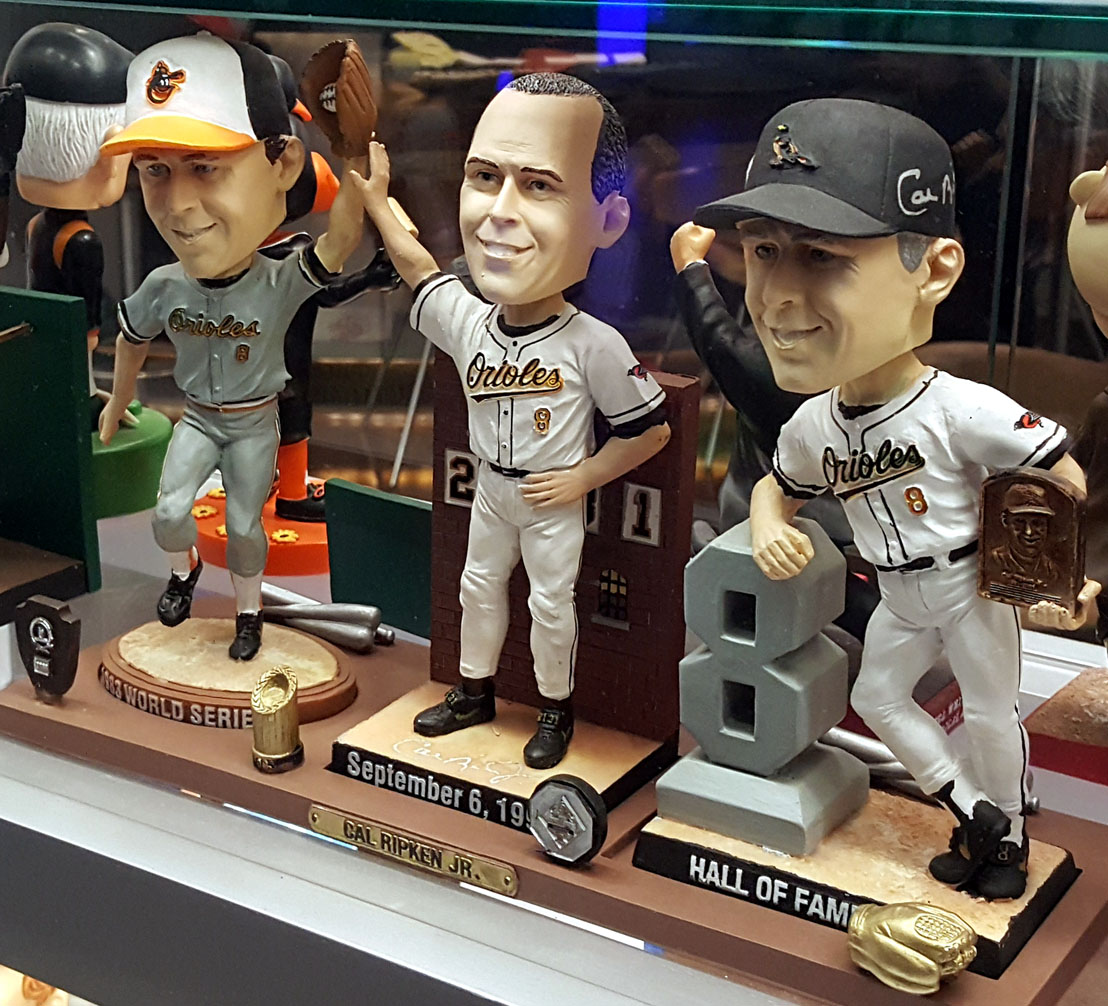
Asking the Hard-Hitting Questions About Bobbleheads in a Ballpark

Here at the gigaplex news desk we like to tackle the big issues from time to time in honor of our days as a hard-hitting news reporter pounding the pavement in search of a scoop.

We do this, because ink runs through our veins, in addition to doing it in order to keep those journalistic skills sharpened in case this whole sports thing falls apart, and it is back to days of covering school board meetings, investigating pet crematoriums, and interviewing families living on lead tainted land.

There are so many stories to be told if one just stops to listen, and asks the right questions to get the answers that need to see the light of day. Good journalism brings those stories to the masses.

So, it is in that spirit of hard-hitting investigative journalism that we find ourselves asking the question that is no doubt on everyone’s mind. If a bobblehead falls in an empty ballpark, and no one is there to see it,  does its head go up and down?

In warehouses and store rooms around the world there are boxed bobbleheads waiting for a chance to be given away once fans return to Ballparks.
Photo R. Anderson

I mean, the simple answer is that if you ask the bobblehead, they will no doubt say yes. This should not come as a surprise to anyone, since literally the only answer a bobblehead can give to any question is yes. Because, you know, the whole fact that they are a bobblehead whose one job in the entire world is to nod up and down.

Of course, wearing our hard news hat, we were not going to just take a bobblehead at their world. I mean can you really trust a yes bobble? At least a Magic Eight Ball has the decency to tell you, “Reply hazy, try again,” if it is not ready to answer a question without just always answering in the affirmative.

So, once it was determined that a bobblehead could not be trusted to answer truthfully, the investigative issue became how best to get to the bottom of answering this bobbleheaded conundrum that has no doubt caused numerous philosophers to at least give it a minor bit of thought.

We could be sitting on a huge conspiracy theory, that is about to blow the head bobbing lid off of the entire thing. Either that or we could just be sitting on a big pile of cardboard boxes.

Perhaps that is why Major League Baseball is still at an impasse related to whether to start the season. People were getting too close to the truth and they needed more time to hide the answer along with the Illuminbobbleati.

The question on everyone’s mind is what did the bobblehead know and when did he know it?
Photo R. Anderson

(Mental note, stop binging X-Files into the wee hours of the morning, it is making you paranoid. Who said that?)

Just think about it. Right now, Ballparks across the country are likely filled with boxes of bobbleheads that were set to be given away to fans during games this year. With no fans, and no games so far, the bobbleheads are just sitting in a store room in the bowels of a promotions closet haphazardly stacked there by an intern who quite possibly can’t believe that they are getting college credit to stack boxes of bobbleheads.

Of course, it is also possible that thanks to the impacts on international shipping, brought about by the COVID-19 pandemic, that the nation’s 2020 bobblehead inventory is sitting in a warehouse somewhere in China, and that the intern never had the chance to stack them in that aforementioned promotions closet. After all, the gloves I ordered from China three months ago still have not arrived, so there is definitely some shipping delays on the slow boats from China.

What really goes on inside a bobblehead’s box when no one is there to see it?
Photo R. Anderson

In the big picture, with no games and no fans in the Ballpark, it does not really matter whether the bobbleheads are stateside, or still in their country of origin since they won’t be getting passed out any time soon.

So, with this new wrinkle of the nation’s supply of bobbleheads potentially being trapped overseas, we sought to go right to the source and really explore the issue with the full resources of our entire Action News Team of one.

We then realized that international travel is kind of hit and miss right now, so, flying to China to witness how the bobbleheads are made was probably not the best thing to do.

So, with travel to China ruled out, we did the next best thing and asked Google how bobbleheads were made in an attempt to see whether something in that process would tell us whether they would indeed bobble after a fall in an empty ballpark. Google basically told us that the most common bobbleheads are made from resin and plastic and that they involve a spring.

Dodger Stadium has an impressive display of bobbleheads but it is still unknown whether a bobblehead falling in an empty Ballpark nods its head up and down.
Photo R. Anderson

I am not sure what additional details I was expecting Google to have given me, but the response was entirely underwhelming. I mean I can look at a bobblehead and know that it is resin and plastic with a spring. Worst of all, now my browser and Gmail are clogged with ads telling me about the bobbleheads I can buy, and I am no closer to answering the question that started this all.

On a side note, if anyone is interested in commemorating the Spring/Summer/Fall/Winter of COVID-19 I did learn that they can order bobbleheads of infectious diseases experts Dr. Fauci and Dr. Birx.

In our investigation into bobbleheads we encountered some bull.
Photo R. Anderson

In the end, it was determined that the world may not be ready to learn the truth of what happens when a bobblehead falls in an empty Ballpark.

For now, it shall remain an open case, just like the age-old debate pertaining to how many licks it takes to get to the center of a Tootsie Pop. I never did trust that Mr. Owl. I just know he is hiding something underneath those big glasses of his.

While I failed to get to the bottom of my investigation of bobbleheads, to all of my fellow journalists out there working tirelessly day and night to tell the stories that need to be told, keep up the good work.

Now if you’ll excuse me, I am off to watch some more X-Files. I really hope the Smoking Man is in this one.

Copyright 2020 R. Anderson

MLB’s Push to Play Ball in 2020 is Heading into Extra Innings

Negotiations continue to heat up between representatives of baseball owners, and representatives of baseball players, in an attempt to salvage some sort of 2020 Major League Baseball (MLB) season.

One of the latest rumors floating around, as reported by several outlets, includes a proposal from the owners to play a 50-game season, followed by expanded playoffs and a World Series. The players representatives have proposed playing as many as 114-games starting around the July Fourth Weekend.

As I have stated many times, I miss baseball and would love to see it played again. I have also said many times, in many ways, that I do not miss baseball to the point that I would want to see a fan-free condensed season just so someone can pat themselves on the back and say, “hooray, we had a 2020 MLB season.” Fifty games a season does not make. Even at 114 games, the risk trade of having a season, versus not having a season does not come out in favor of playing ball.

As part of the proposals being floated around it was reported that players will have the option to sit the season out if they do not feel safe playing ball in the era of the global COVID-19 pandemic. While players would not be paid if they sit the season out, they would get credited with a year of baseball service.

Baseball in the olden days, like during Spring Training of this year, involved crammed dugouts. The baseball in the new time of COVID-19 will look very different.
Photo R. Anderson

Any final agreement on playing the 2020 baseball season must allow players to opt out, and I applaud that position being addressed through the negotiations.

While I am firmly entrenched in my stance that baseball just needs to sit this year out and try again next year, I know that there are people who will disagree. This other side of the coin from my position feels that having baseball, any baseball, is just what is needed during these times of pandemic and civil unrest.

Although I do not agree with that position, I respect that position, just as I would hope that people on the other side would respect mine. Society works best when people can have a healthy productive debate on an issue, agree to disagree, and part with respect for the other person’s opinion.

But from where I am sitting, I have yet to hear a strong enough case that baseball, any amount of baseball, this year would be in the best interest of all involved. Let me state my case.

I get that there are huge financial stakes for both the owners and the players if baseball is not played this year. I also understand that the players in the Minor League Baseball (MiLB) ranks are being hardest hit by a lack of games, as in many cases they are about to lose their paychecks.

Sean Doolittle and other members of the Defending World Series Champion Washington Nationals, committed to give MiLB players within the Nationals organization financial assistance during the time without baseball.
Photo R. Anderson

In regards to the players of MiLB, I am encouraged by the stories of MLB players, like, David Price of the Los Angeles Dodgers, and Sean Doolittle and other members of the Washington Nationals, committing to give MiLB players financial assistance.

In making the announcement on his Twitter page, Doolittle noted that, “All of us were minor leaguers at one point in our careers and we know how important the weekly stipends are for them and their families during these uncertain times.”

I am also encouraged by the stories I see of MiLB Ballparks, like the home of the Pensacola Blue Wahoos, and Sugar Land Skeeters, finding creative ways to generate revenue inside their facilities during this absence of games.

I do not pretend to believe that financial hardships do not exist in baseball, but in many cases the financial strain that they are feeling is a drop in the bucket compared to the issues being faced by small businesses and employees across the country who have lost their livelihoods and jobs as a result of the COVID-19 pandemic.

A word to baseball as you air your grievances about trying to make sure you get your money by having some sort of season, know the room. You may find that many of the fans that you count on to support you will get a bitter taste in their mouths by reading stories of you arguing over millions of dollars, when many of them are wondering which bill they won’t pay this month in order that they can eat.

The Pensacola Blue Wahoos listed their ballpark on Airbnb as a way to generate revenue during the stoppage of baseball brought about by COVID-19.
Photo R. Anderson

If baseball, any baseball, is played this year, of course the players should be paid.

Furthermore, they should be paid well for risking their lives during a pandemic just to bring people at home some distraction from the world events around them. They just need to ensure that the discussions regarding how much they should get paid do not come off as ignoring the suffering around them, and the bigger picture.

This is a tricky point, as well as a sticky point. With no fans in the stands, creating a strictly made for television game so that networks and teams can make revenue to pay players for playing that game can come across as rather tone deaf.

But wait, the owners will say, “in some cities we are allowed to have up to 25 percent capacity in our Ballparks, so there will be fans in the stands for the games.”

And how exactly is the 25 percent decided upon?

I am sure most teams have season ticket holders for more than 25 percent of the seats in a Ballpark. Let us also not forget all of those corporate funded luxury suites that surround many Ballparks. So, do season ticket holders and suite users get first crack at seeing a game in person, versus someone who just buys a couple of tickets a season? Don’t even get me started on how one would be able to socially distance at a concession stand.

Do teams set up a Hunger Games style lottery where everyone puts their names in a hat and hopes that the Ballpark fortunes are forever in their favor?

I welcome being shown if there is a way to equitably pick 25 percent of a fan base to sit in the stands for a game. Until then, from my seat here, I conclude that more problems are created than solved by starting to let fans into the Ballparks at reduced capacity.

As part of any return to action, players would be socially distanced within the dugout and would be prevented from any physical contact with each other such as high fives, hugs, etc.
Photo R. Anderson

Another issue to consider is the health of both players and fans attending these games. As part of any return to action, players would be monitored for symptoms of COVID-19.

Additionally, as I noted in a previous column, players would be socially distanced within the dugout and would be prevented from any physical contact with each other such as high fives, hugs, etc.

Even if I am willing to concede that players could be socially distanced in the dugout, and on the field, there is still the issue of dirty balls. Most balls I have seen put into play are touched by a lot of people.

A ball that is part of a routine double play has the potential to be touched by up to four players, and that is before the ball goes around the horn in the infield. And telling a pitcher that they can’t lick their fingers before a pitch is probably not going to go over too well.

How to socially distance during mound visits is one of many areas that will need to be figured out before baseball returns during the COVID-19 era.
Photo R. Anderson

Again, make no mistake, I miss baseball. But I have yet to see a proposal where the benefit of a return of baseball outweighs the risks. And I am sorry, but the champion of a shortened, round robin, regionally based, season does not deserve to be called World Series Champion in the same light as a team that battled for a full season in the past.

The record books of baseball would be much better served by a line item saying, “the 2020 season was cancelled due to a global pandemic brought about by COVID-19, but returned even stronger in 2021,” then trying to pass off a team that played a third of the games in a normal season as the champion.

If players and teams want to stage a 50-game exhibition season as a measure of goodwill that is one thing. But, don’t try to play 50 games in empty ballparks and try to call it a season. You are so so much better than that baseball.

So, in conclusion, stay home baseball. Take care of yourself, and I will hopefully see you next spring. I care too much about you to have you risk your health, and the health of those who play you just so somebody can unfurl a “mission accomplished 2020 World Series Champion” banner inside your Ballparks.

Now if you’ll excuse me, I have some books about baseball to catch up on.

Copyright 2020 R. Anderson